Hunchly vs Forensic OSINT
Used by criminal and civil investigators who require defensible evidence, auditability, and repeatable capture workflows.
Hunchly established structured approaches to online evidence capture and chain-of-custody preservation. For many investigators, it became an early standard for documenting web content defensibly.
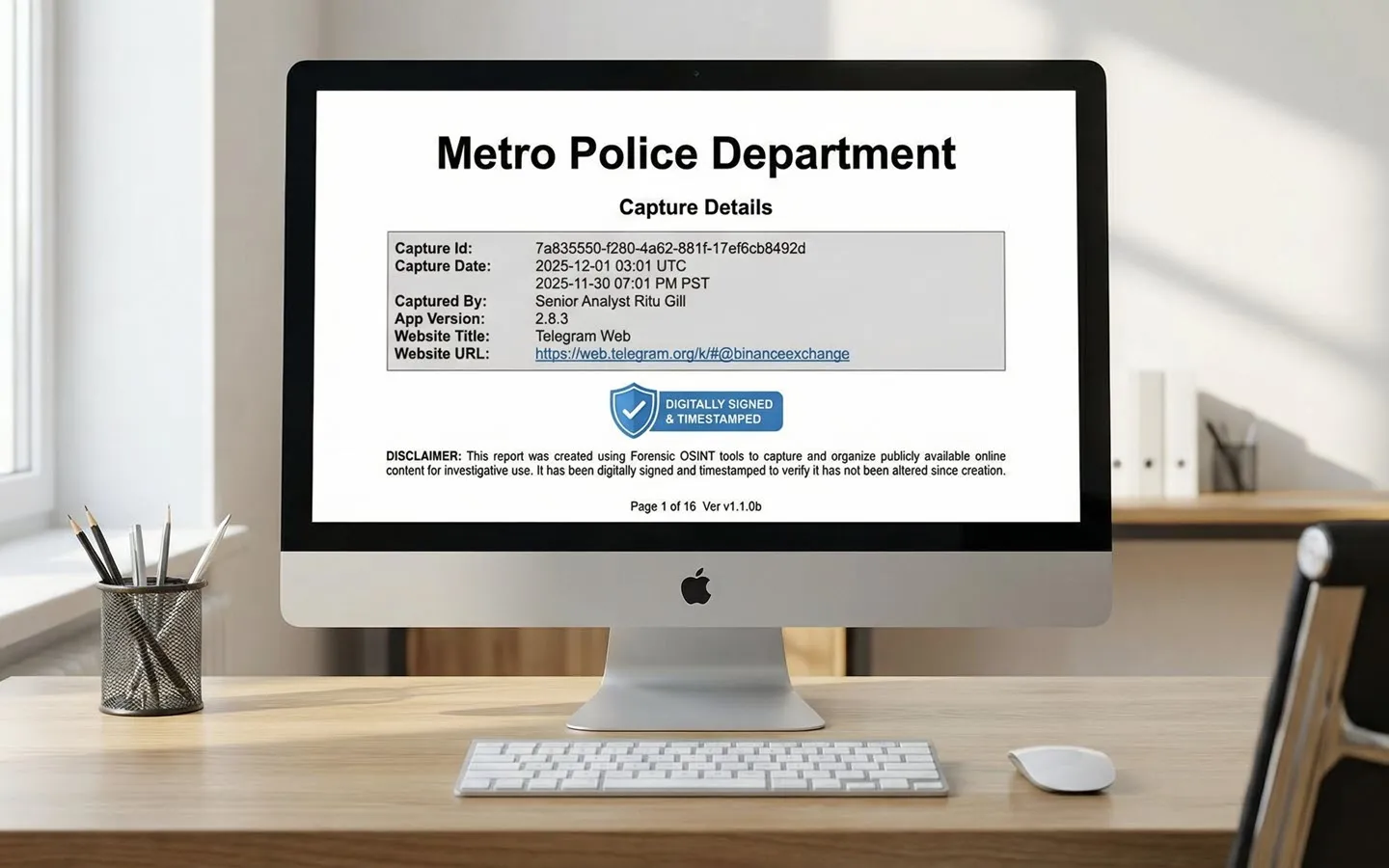
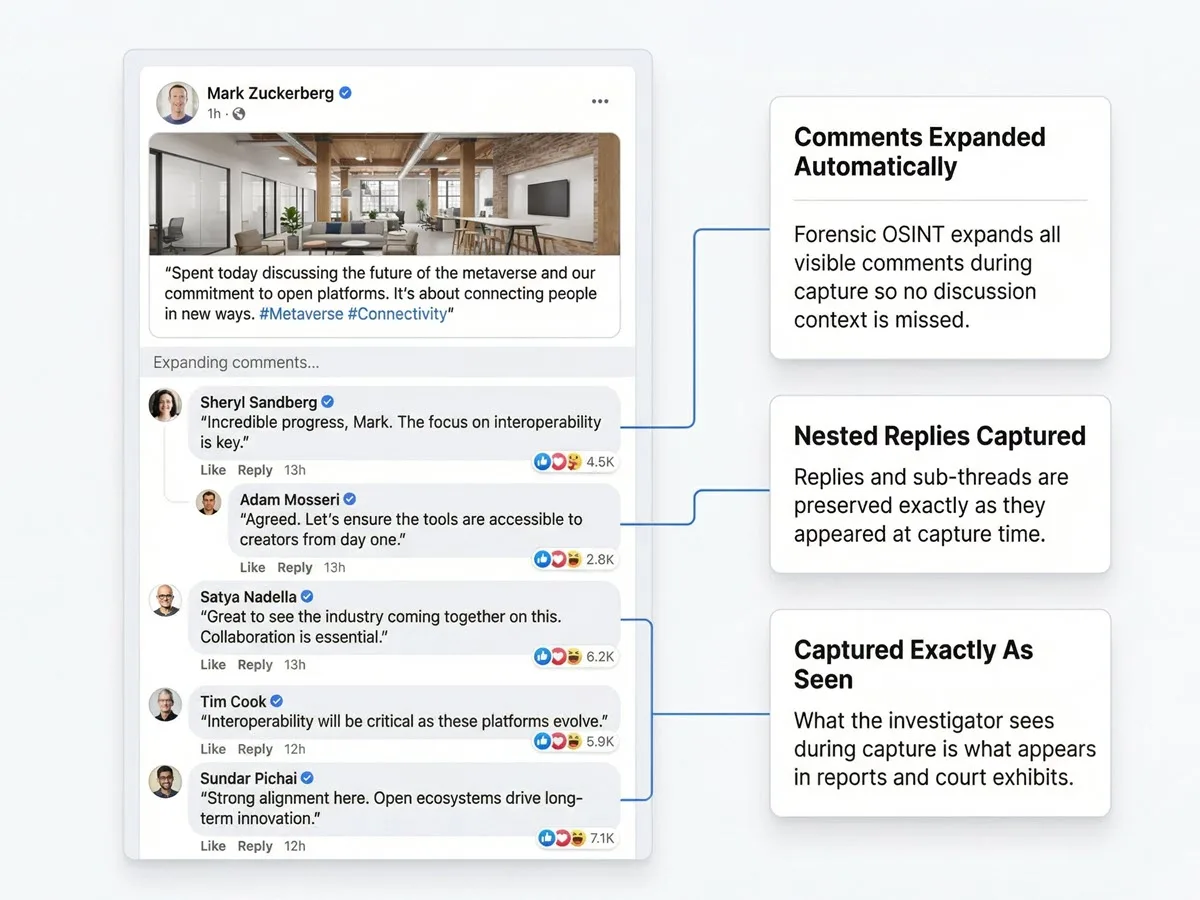
Forensic OSINT goes further than Hunchly by extending capture beyond basic preservation. It captures complex pages more completely, expands comments automatically, preserves dynamic content as it appeared to a human observer, and generates court-ready evidence at the moment of capture — without manual exports, stitched screenshots, or secondary tools.
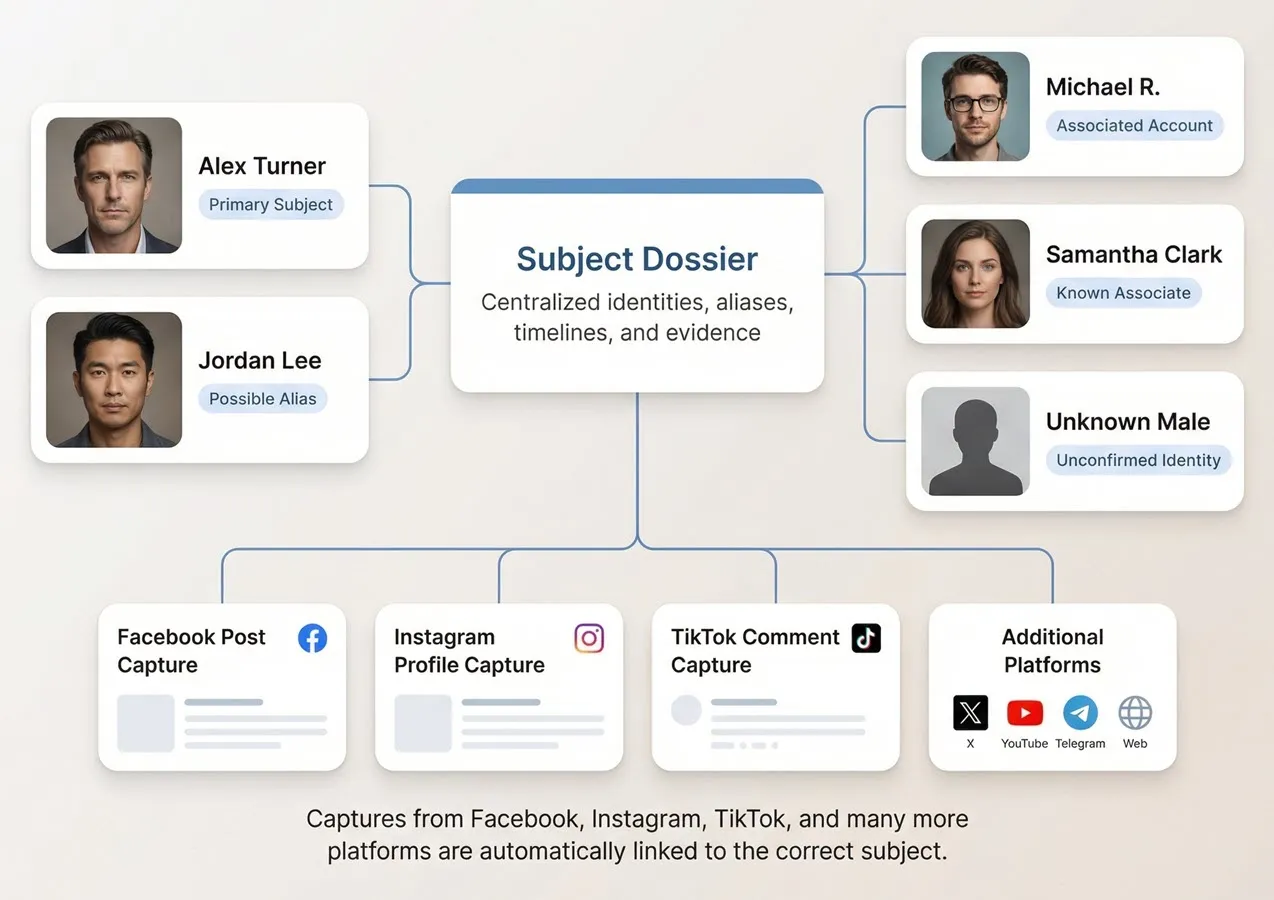
Where Hunchly focuses on preserving individual captures, Forensic OSINT builds on that foundation by allowing investigators to start with court-ready capture in Essential, while intelligence and investigative context accumulate in the background. When teams are ready, upgrading to ELITE unlocks advanced analysis and intelligence capabilities across previously captured evidence.
HunchlyBasic web page capture
Manual export and report assembly
Limited handling of dynamic content and comment expansion
Forensic OSINTCourt-ready capture in Essential
Advanced capture for complex, dynamic pages
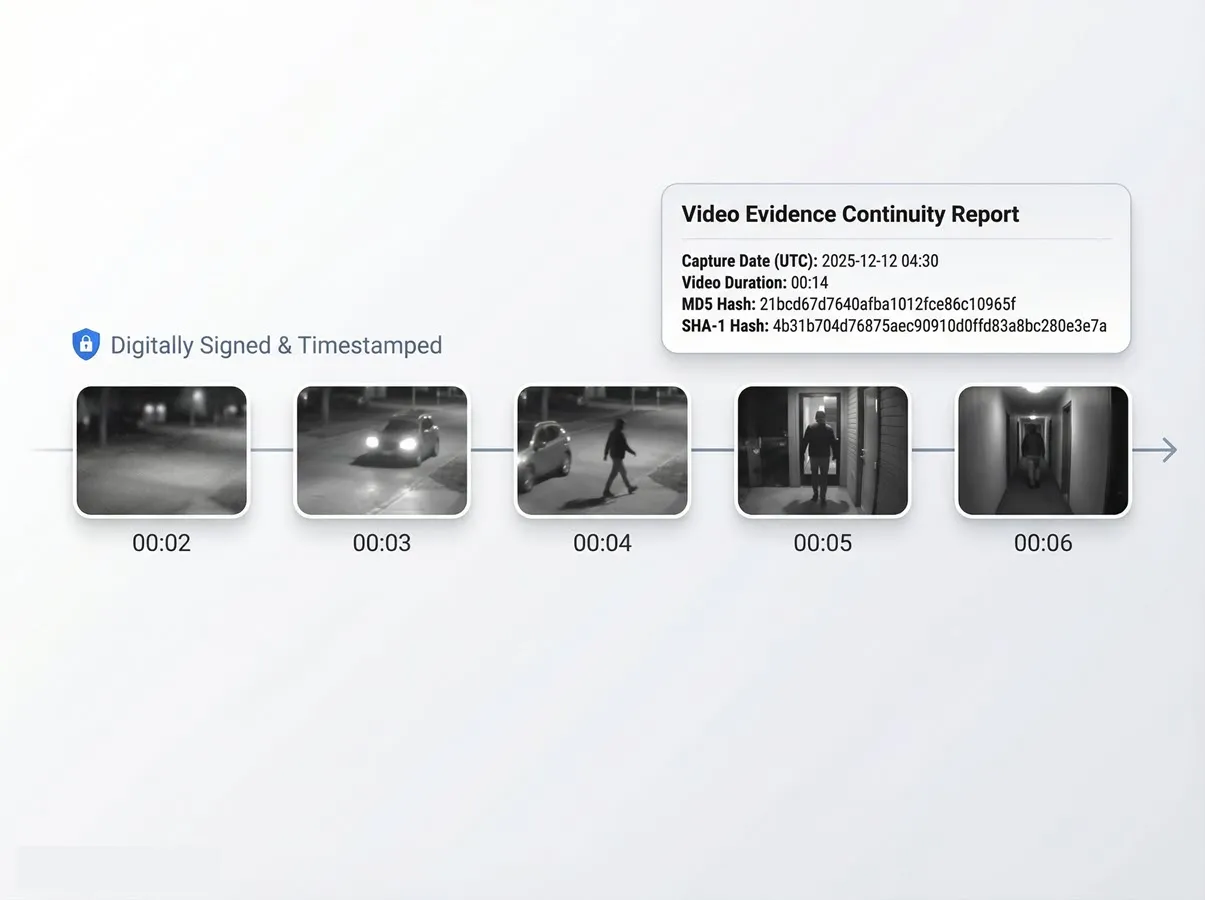
Preservation by default with digital signatures and timestamps
ELITE unlocks advanced intelligence and analysis applied to previously captured evidence
Forensic OSINT is designed to replace traditional web capture tools by combining advanced capture, preservation, and investigative intelligence in one system.
Questions from Investigators Using Hunchly
Q: Does Forensic OSINT replace Hunchly?
Forensic OSINT is designed to serve the same core purpose as Hunchly while extending its capabilities. It captures more complex content and removes the need for manual exporting, stitching, or reliance on external reporting tools.
Q: Is the evidence as defensible as Hunchly captures?
Yes. Each capture is digitally signed and timestamped at the moment of collection, preserving integrity. This produces standardized, court-ready documentation by default.